
from the eye of the storm:
Projects & Happenings
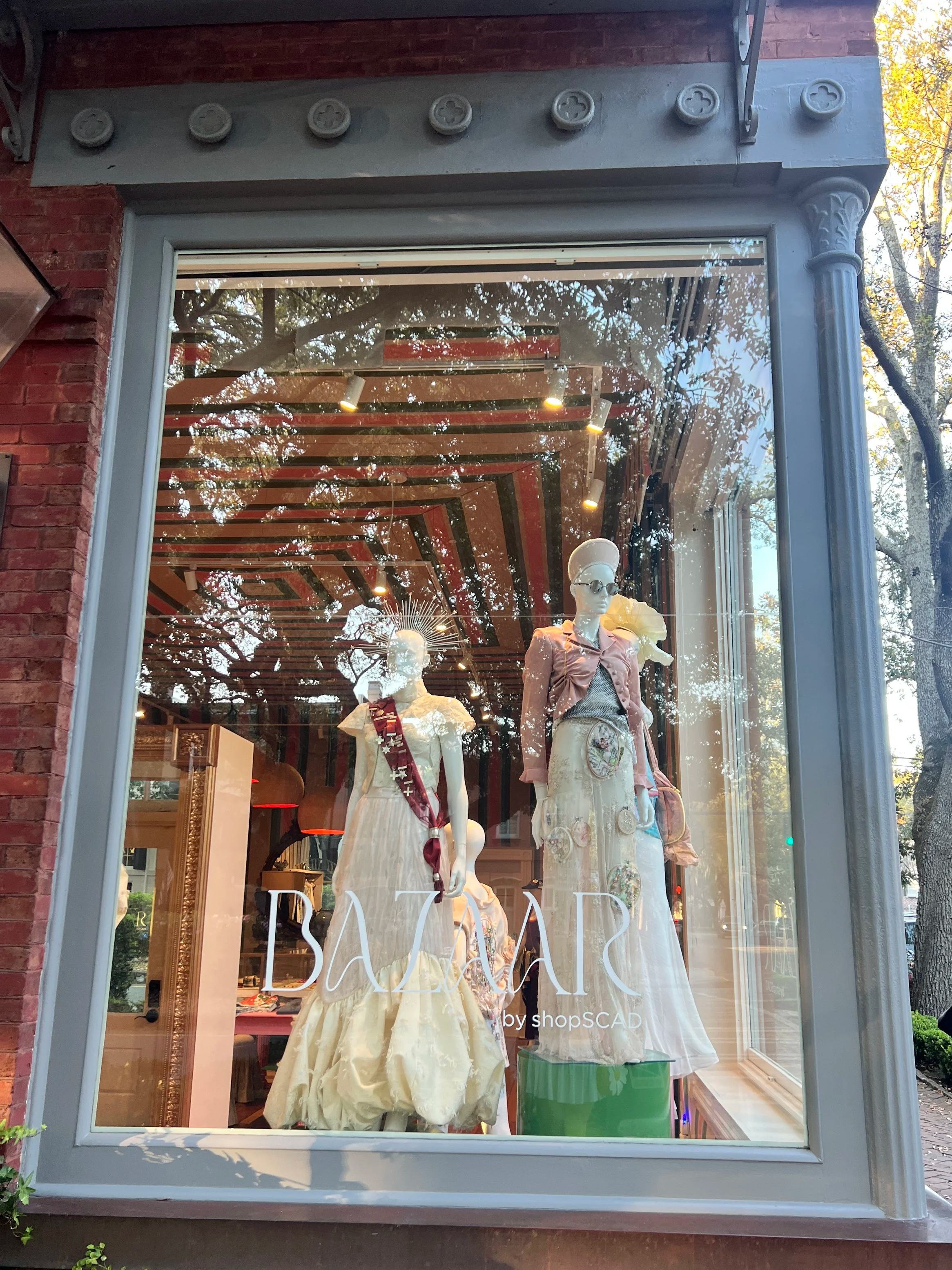
BAZAAR by ShopSCAD: Building Something Real
savannah ga - march 2026
There’s a very specific kind of chaos that comes with building something from the ground up. Not the bad kind, the good kind. The kind where every moving piece matters, nothing is fully linear, and somehow it all comes together anyway.
That’s exactly what working on BAZAAR by shopSCAD has felt like.
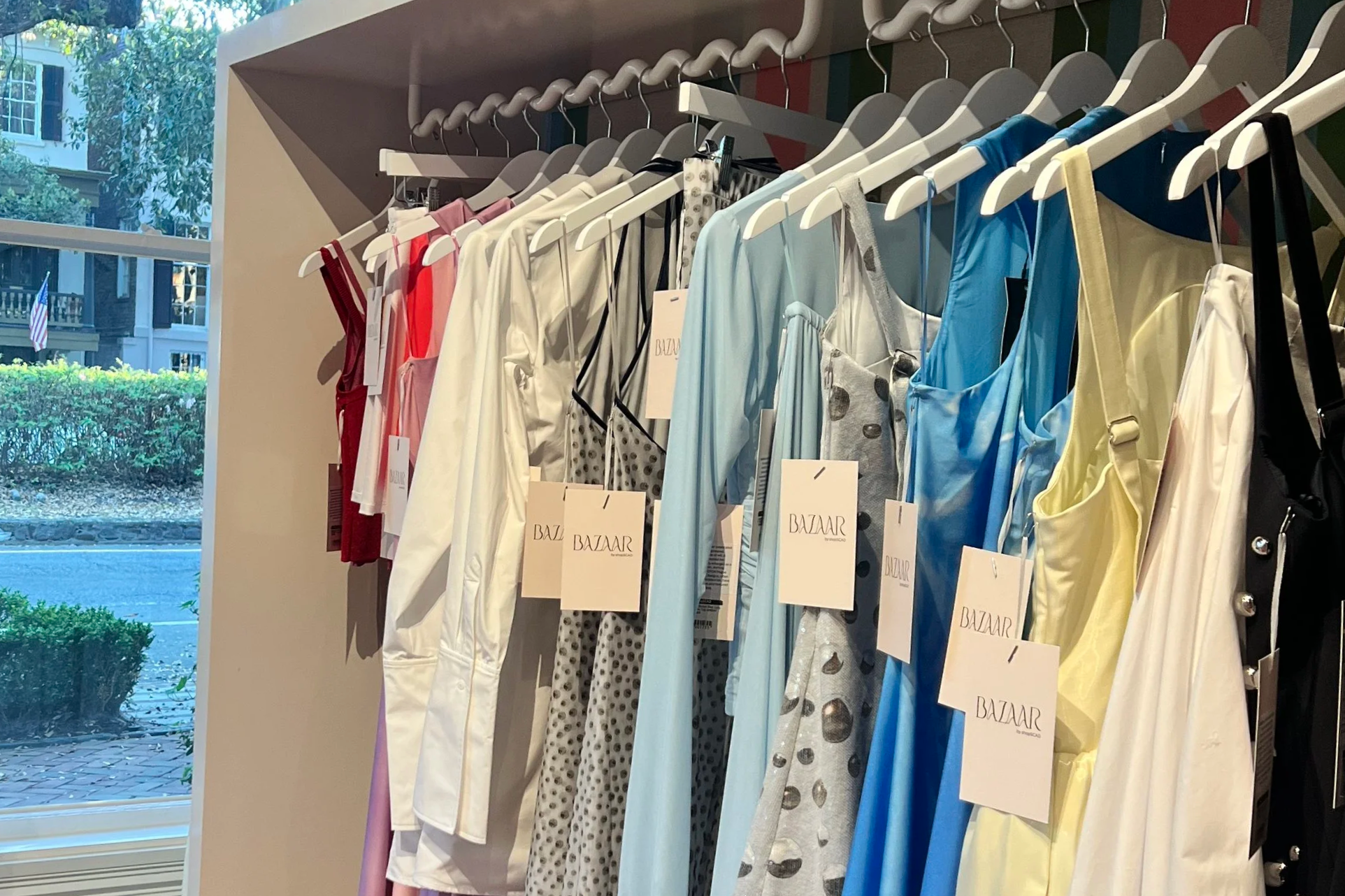
If you haven’t seen it yet, BAZAAR is a new experimental retail concept designed to bring emerging design talent into a real, functioning retail environment. it is a curated boutique bringing student work from the classroom to the sales floor, and celebrating SCAD’s distinguished alumni and faculty.
Which means a lot had to happen behind the scenes to make it real. and i learned a LOT along the way.
So what did I actually do?
Officially, my title sits in the administrative world. Unofficially, this project pulled me into buying, production, and project management - all things i have dabbled in throughout my career.
On any given day, that looked like:
Coordinating backend buying across a lot of stakeholders
Managing production timelines that were constantly evolving
Working across teams that don’t usually sit in the same room (retail, fashion, legal, interiors, leadership, you name it)
Supporting vendor relationships and helping move product from concept to floor
Keeping track of details that absolutely could not get dropped
And then multiply that by an almost 500 piece assortment for this first iteration.
So yes, there were spreadsheets. A lot of spreadsheets. The kind where you open them and just stare for a second before deciding who you’re going to be that day. the kind where you open them, forget what you were doing, close the tab, and then think “oh sh*t, I needed that, actually".”
plus of course, the one-off project here and there: Upholstering a jewelry case. organizing the stock room. entering inventory into lightspeed. tagging and pricing so. many. garments.
Where it clicked for me
This project hit a really interesting intersection in my life.
Before SCAD, I was in corporate fashion retail. Structured, fast-paced, numbers-driven, very much about execution at scale. i also worked at a high school, teaching students to sew, create, and manage costumes. Then I moved into my role at SCAD within the School of Fashion & Business, which is more academic, more people-focused, more about systems and long-term impact.
And now I’m also in the middle of my Master’s in Creative Business Leadership.
BAZAAR somehow pulled all three of those worlds into one place.
It required creative thinking, but also operational discipline. It demanded flexibility, but also structure. It asked for vision, but also follow-through. That balance is something I’ve realized I really love, and honestly, where I do my best work.
The SCAD piece of it all
What I appreciate most about this project is how clearly it reflects what this environment is capable of when it’s working at its best.
This wasn’t about simulating the industry. It was the industry, just happening inside an academic setting.
Students and emerging designers weren’t just participating, they were contributing to something that had real stakes. Real timelines. Real outcomes. this was all new to everyone, and there was a lot of explanations i had to be confident to provide. i had to guide students into the world of selling, pricing their products, and understanding consignment structures.
I answered a lot of questions. I asked even more.
Being part of building that infrastructure, even behind the scenes, was incredibly rewarding.
What I’m taking with me
Besides a very deep appreciation for organized data and clearly named file systems.
More than anything, this project reinforced that I’m at my strongest when I’m sitting between ideas and execution. When I can help translate something conceptual into something that actually functions, scales, and exists in the real world.
Also, that large-scale collaboration is never as clean as you want it to be, but that’s kind of the point.
And finally, that the best projects are the ones that feel a little bit bigger than your job description.
When a Vest Button Goes Viral
January 2026
I’ve always casually posted on TikTok. Nothing strategic, nothing overly planned. Just little behind-the-scenes moments, random projects, things I’m already doing anyway.
Typically, that lands me somewhere around 1,200 views per video.
So imagine my surprise when one of them hit 258,000 views.
Which, in my world, absolutely counts as “viral.”
The setup: Les Mis, but make it high school
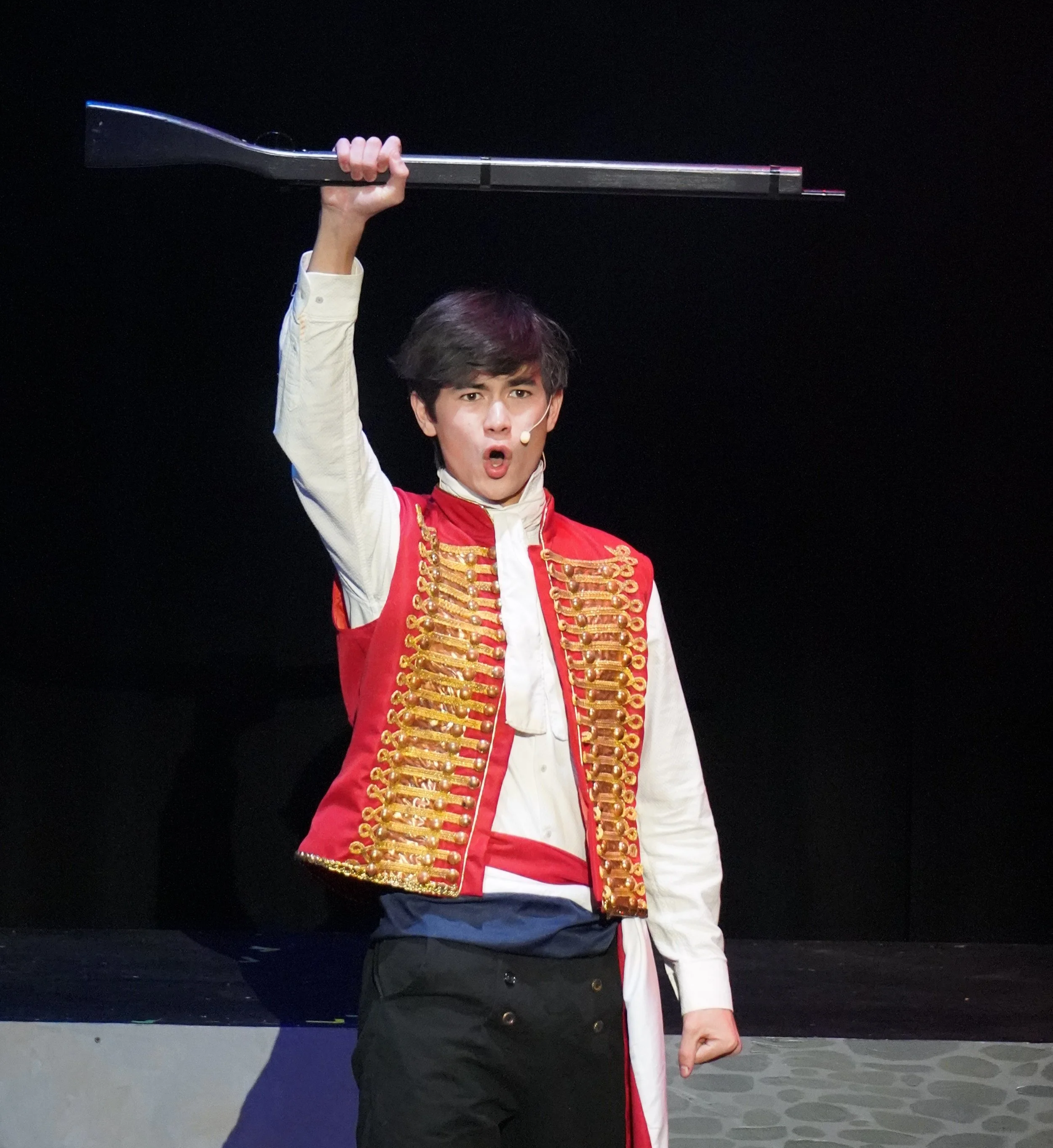
Back in January, I was working as the assistant costumer on a local high school production of Les Misérables.
This was a bit of a shift for me. At William Mason high school, I was used to running the show with a team of students, building looks from the ground up. This time, I stepped into a supporting role, which honestly was a nice change of pace.
I got to focus on:
Sourcing costumes for rent
Altering pieces ordered online
Making accessory elements
…And steaming dresses. So many dresses. An unreasonable number of dresses.
The vest (if you know, you know)
After one fitting, I took home a vest for the character Enjolras.
And if you know Les Mis, you know this vest matters.
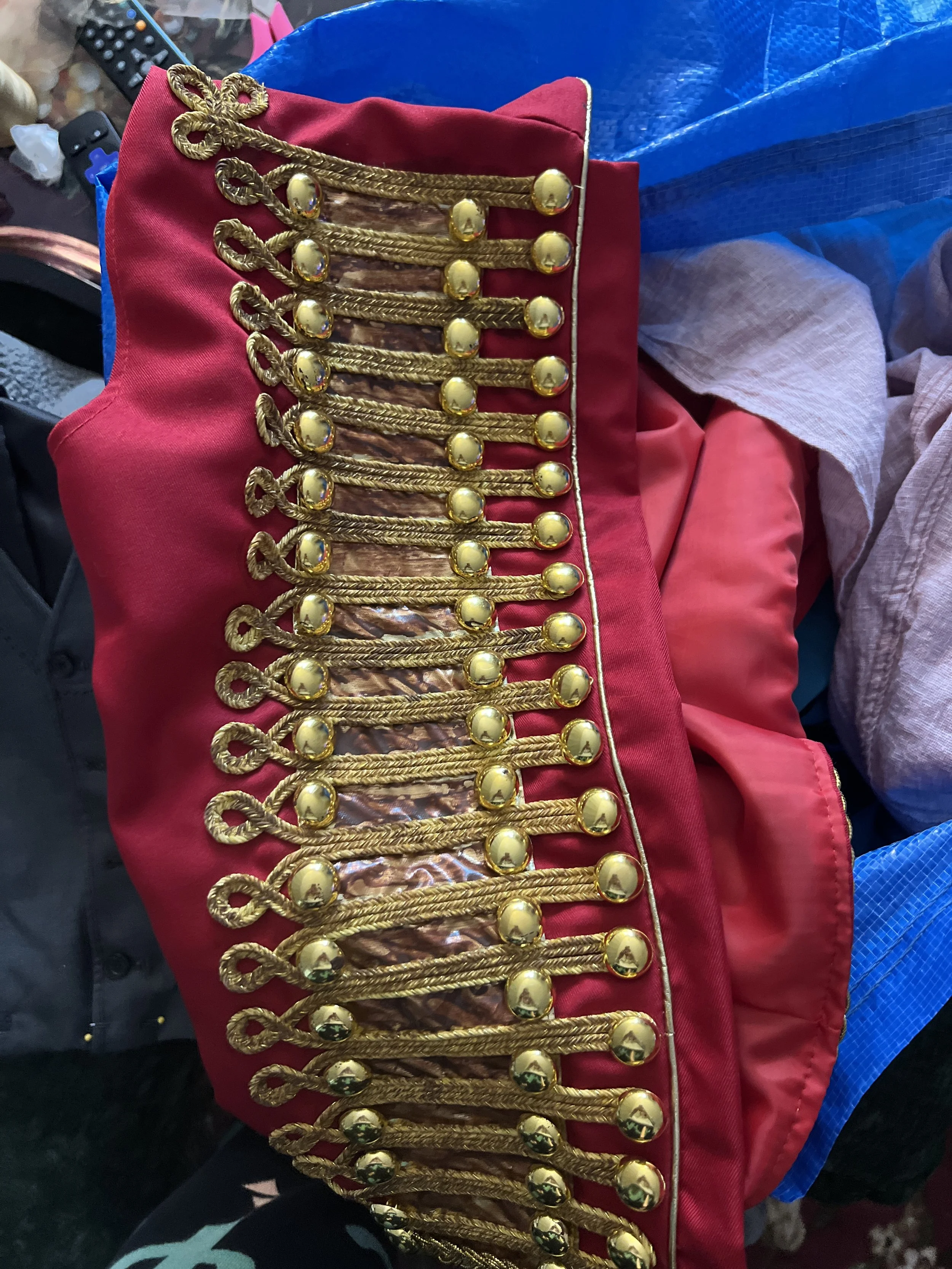
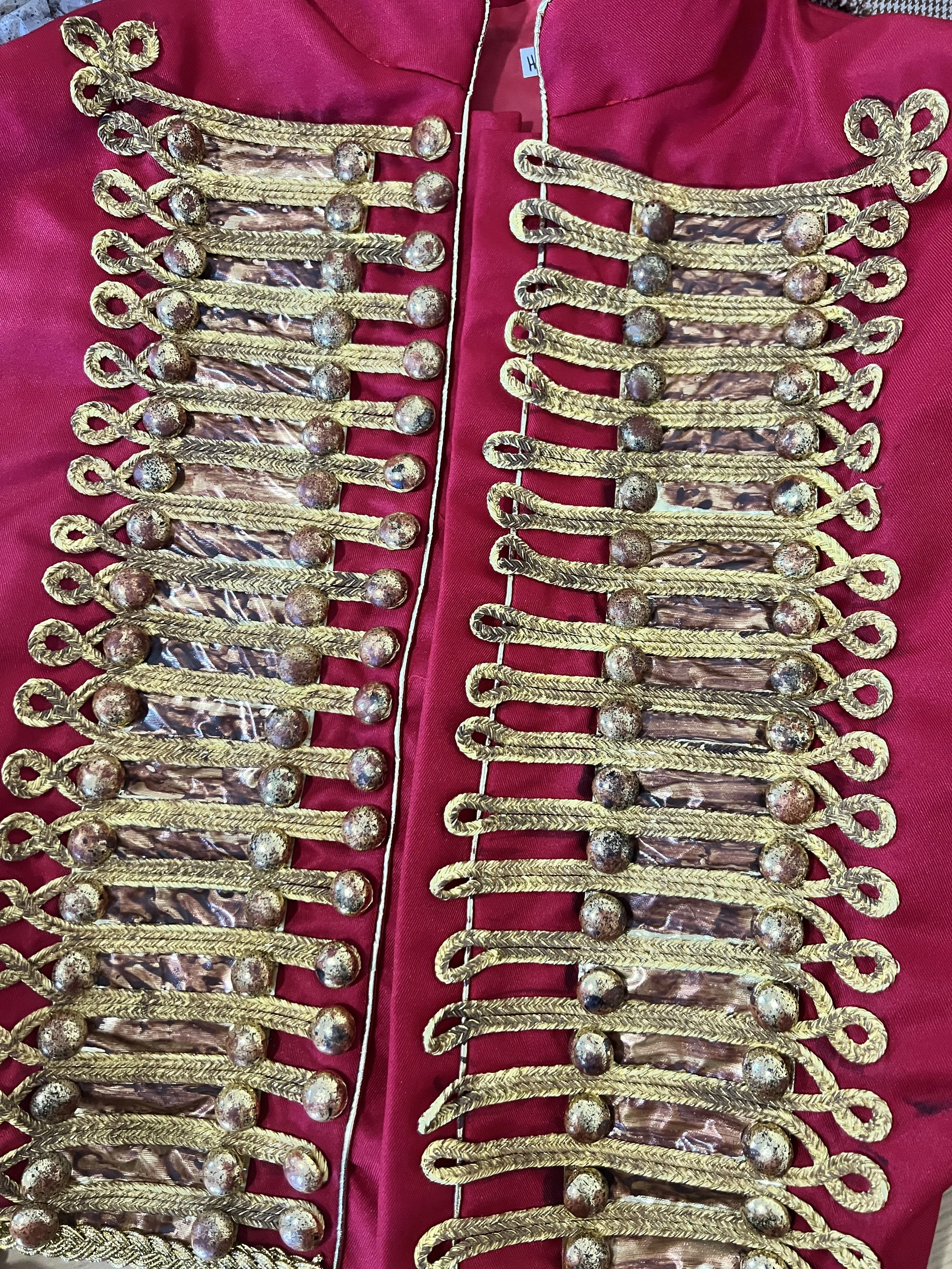
The piece we had was… fine. It did the job. But the buttons? Not great. They were bright, shiny, plastic gold and caught the light in a way that felt very “fast fashion” and not at all “French Revolution.”
We were working with a tight budget. Replacing them wasn’t really the move. So instead, I decided to see what I could do to make them feel a little more grounded. Less shiny, more weight. Less costume, more character.
The process (or: controlled chaos on my patio)
One Saturday morning, I took matters into my own hands.
I put the entire vest inside a plastic trash bag and cut small slits so I could pull each button through. If you’ve ever seen those frosting caps hairstylists use for highlights, it was basically that. Very DIY. Very “this should work.”
Then I took it outside and got to work.
Layered spray paint. A little acrylic for dimension. Some trial and error. The goal wasn’t to make them look ancient, just to knock back the shine and give them a slightly worn, brass-like finish.
Honestly, it worked.
The TikTok moment
I filmed the whole thing, mostly out of habit. I’ve been documenting random creative projects like this for years when I remember to. the very first frame was me doing the trash-bag method.
I posted it and didn’t think much of it.
Then, within 24 hours, it hit 60,000 views.
For context, my previous “high” was 32k on my very first video ever. So this felt… significant.
The notifications did not stop. Comments, likes, shares. People were into it.
And then, as TikTok does, the comment section took on a life of its own.
People were baffled by this trash bag technique. a technique I didn’t even think twice about. I just looked in the cabinet and saw a trash bag.
other costumers, scenic artists, and casual crafters were pocketing this technique for later, telling me things like “11/10 prep work.” sometimes I don’t even realize my mind works differently like this, until something i didn’t even think twicr about starts blowing people’s minds.
clearly, the average commenter isn’t looking in the trash can for supplies enough.
Enter: The Tiffany Effect
A handful of commenters pointed out that the buttons “wouldn’t look old” because, historically, they would have been new at the time.
Which is… fair. Technically.
But this is where I was introduced to something called the Tiffany Effect.
The Tiffany Effect is the idea that something can be historically accurate, but still feel wrong to a modern audience because of our current associations. The name “Tiffany,” for example, existed in the Middle Ages. Completely accurate. But if you put a medieval character named Tiffany in a story, it feels incorrect because we associate it with something modern.
That’s exactly what was happening here.
Yes, the buttons could have been shiny and new. But visually, on stage, to a modern audience, that reads as cheap or out of place. Slightly aging them actually makes them feel more believable, even if it’s not strictly historically precise.
So now not only did I have a viral-ish video, I also had a new favorite niche historical phenomenon.
What I took from it
Besides the fact that people on the internet have opinions about buttons.
This whole thing reminded me that:
Small details matter more than people realize
Practical problem-solving is often more valuable than perfect accuracy
And sometimes the most random, low-stakes projects are the ones people connect with the most
Also, that I should probably post more consistently, but let’s not get ahead of ourselves.
Final thoughts
There’s something very funny to me about the fact that a quick DIY fix on a high school costume piece ended up reaching over 250,000 people.
Not a full collection. Not a major project. A vest. Specifically, the buttons on a vest.
But I think that’s kind of the point.
People like seeing how things are made. They like clever solutions. they like trash bags and spray paint and me in my pajamas on the patio. They like the behind-the-scenes details that usually go unnoticed.
And apparently, they really like when you take the shine off plastic buttons.
HighBall Halloween 2024: Americana Dream Girl
Columbus OH - October 2024
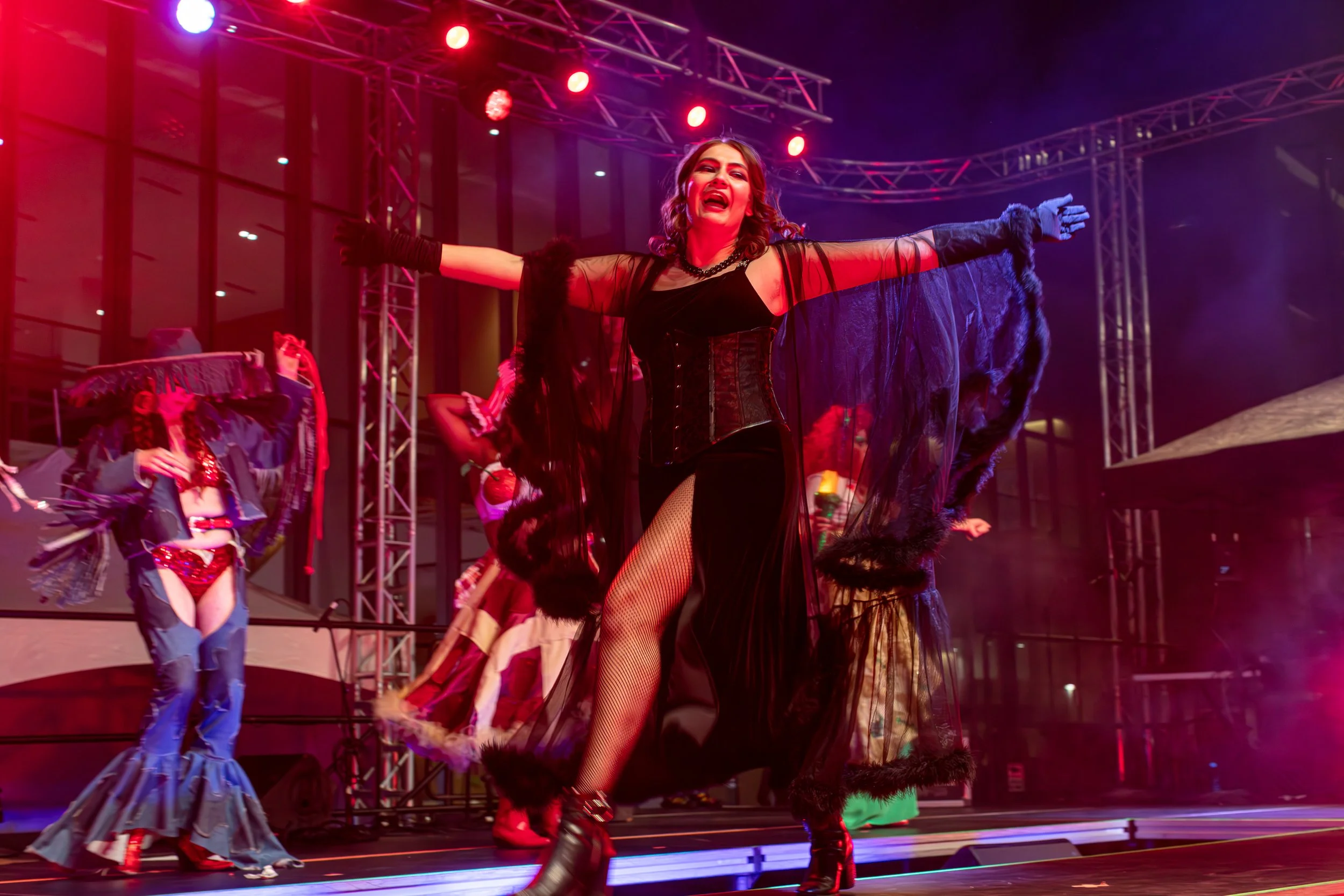
I was selected as one of six featured designers in the HighBall Halloween Costume Couture Runway Competition, which still feels a little surreal to say out loud.
HighBall isn’t just a runway show. It’s part fashion, part performance, part spectacle. Think couture meets Halloween meets controlled chaos, with a live audience and absolutely no room for error.
Naturally, I said yes.
The Concept: Americana, But Make It Feminism
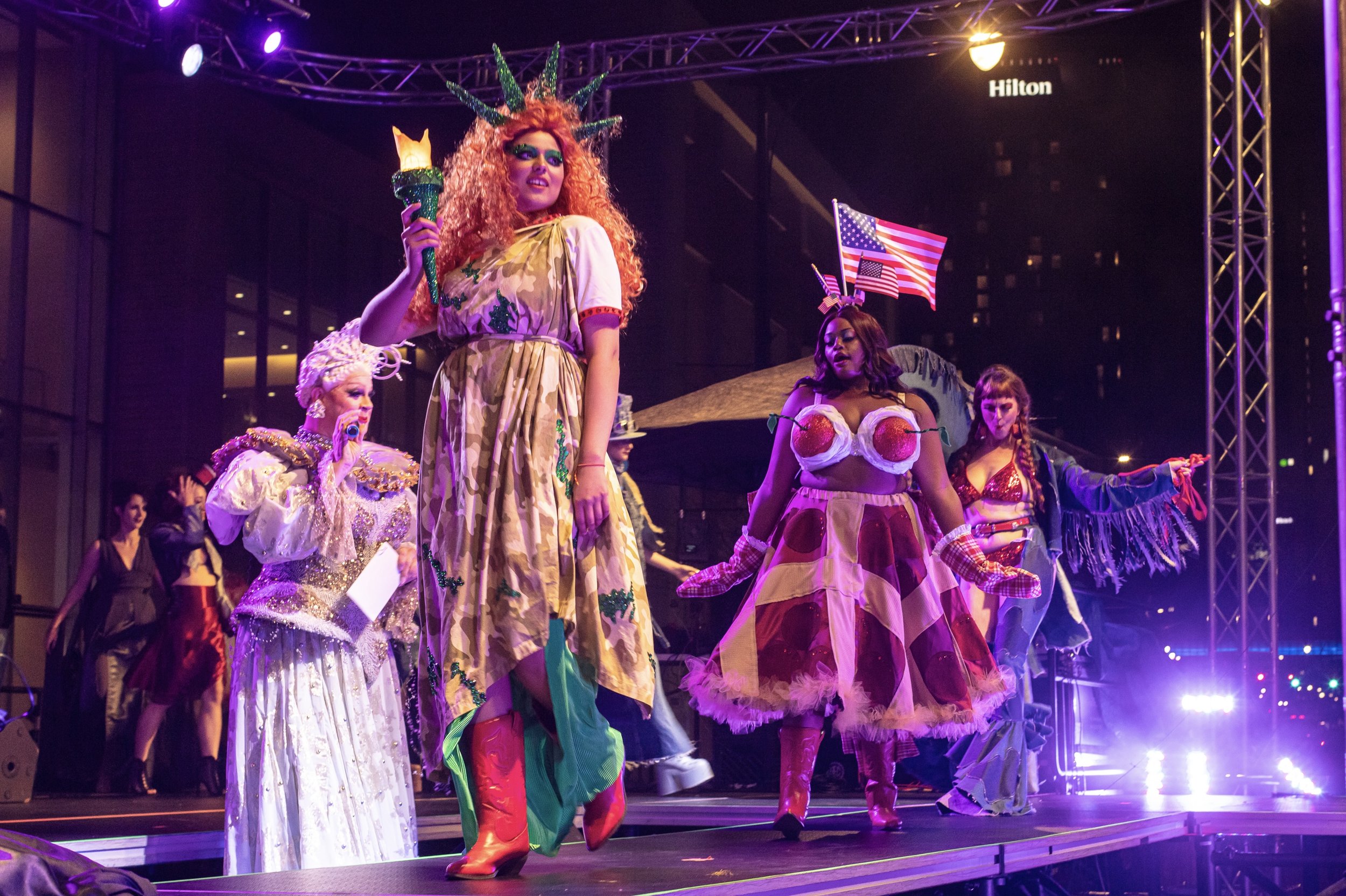
My collection was called Americana Dream Girl.
I wasn’t interested in patriotic nostalgia in the traditional sense. I wanted to pull from iconic American imagery and twist it into something more self-aware. Less “land of the free,” more “who exactly was this designed for?”
The collection played with that tension. It was campy, a little unhinged, and very intentional.
The lineup included:
A sexy cowgirl pinup moment
A cherry pie, inspired by the 50s housewife who would take her out of the oven
A camp, drag-inspired Statue of Liberty
And a chaotic, trailer-trash bride cover in trash from sprinting through the yard to jump on the back of a motorcycle and elope in Vegas
Very Vegas. Very theatrical. Slightly absurd, but grounded in something real.
The Process: Months of Controlled Chaos
I worked on this collection from May through October, which sounds like a long time until you realize how quickly that disappears when you’re designing and producing everything yourself.
A huge part of the process was sourcing. Most of the materials were upcycled, which meant I spent a lot of time thrifting.
And by thrifting, I mean:
Digging through racks for the right textures and colors
Buying curtains with potential an saying a prayer
Finding decorations, sequins, rhinestones, and american flags
scouring creative reuse stores for glitter. lots of glitter.